Quick Answer
A reliable waterproof connector manufacturer should be evaluated based on:
- IP rating performance (IP67 / IP68 / IP69K)
- Manufacturing capability and in-house production control
- Quality testing system and batch traceability
- International certifications (ISO, RoHS, CE, REACH)
- Material durability and corrosion resistance
- OEM/ODM customization capability
- Production capacity and supply chain stability
👉 The most important factor is not price, but whether the supplier can ensure stable waterproof performance under real industrial conditions.
Why Choosing the Right Waterproof Connector Manufacturer Matters
In industrial applications such as outdoor lighting, marine systems, transportation, and automation equipment, waterproof connectors directly affect system stability.
A low-quality connector can cause:
- Signal interruption
- Water ingress failure
- System downtime
- Increased maintenance cost
For OEMs and system integrators, selecting a reliable industrial connector supplier is a long-term engineering decision, not just a procurement task.
Key Evaluation Criteria for Waterproof Connector Selection
| Evaluation Area | What You Should Check | Risk If Ignored |
|---|---|---|
| IP Protection | IP67 / IP68 / IP69K testing data | Water ingress failure |
| Manufacturing Control | In-house CNC & molding | Inconsistent quality |
| Quality System | 100% testing & traceability | High defect rate |
| Certifications | ISO, CE, RoHS compliance | Market access risk |
| Materials | Metal housing, gold contacts | Corrosion & signal loss |
| OEM/ODM Capability | Custom design support | Limited project flexibility |
| Supply Stability | Lead time & capacity | Production delays |
1.IP Rating and Waterproof Performance Testing
Understanding IP67, IP68, and IP69K
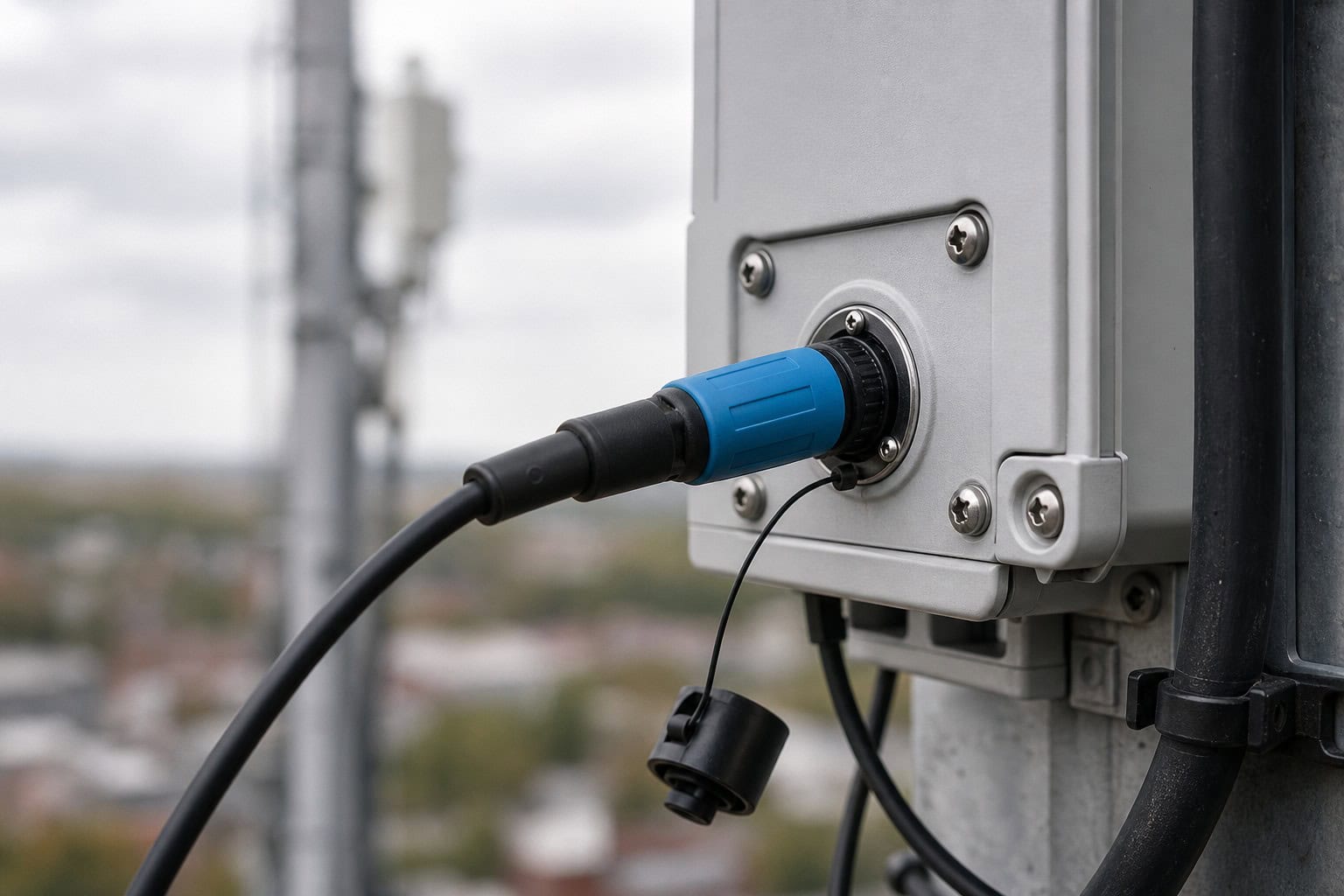
The IP rating defines how well a connector resists water and dust. Most industrial waterproof connector applications require at least IP67 protection, while harsher environments require IP68 or IP69K.
What Buyers Should Verify
A professional waterproof connector manufacturer should provide:
- Immersion test reports
- Pressure resistance data
- Sealing structure validation
- Repeatable performance testing results
👉 Without real test data, IP ratings are only theoretical claims.
2.Manufacturing Capability Determines Product Consistency
In-House Production is Critical
A high-quality industrial connector factory should control:
- CNC machining for metal parts
- Injection molding for housing
- Assembly precision systems
- Tooling maintenance processes
Outsourced production increases variability and reduces reliability.
Why Consistency Matters in B2B Projects
In OEM production, even small dimensional deviations can lead to:
- Poor mating performance
- Waterproof failure
- Assembly issues in mass production
Consistency is more important than sample quality.
3.Quality Control System and Reliability Assurance
Essential Testing Processes
A reliable waterproof connector supplier should implement:
- Electrical continuity testing (100%)
- Insulation resistance testing
- Salt spray corrosion testing
- Vibration and mechanical durability tests
Traceability System
Each batch should be traceable to:
- Raw materials
- Production line
- Testing records
This ensures accountability in case of field failure.
4.Certifications and Global Market Compliance
To enter international markets, certifications are essential.
Key Certifications Include
- ISO 9001 (Quality Management System)
- RoHS (Environmental safety)
- CE (European compliance)
- REACH (Chemical safety regulation)
👉 Certified suppliers are more reliable for long-term industrial partnerships.
5.Material Selection and Environmental Resistance
Key Material Choices
High-performance waterproof connectors typically use:
- Aluminum or zinc alloy housing (strength + corrosion resistance)
- PA66 engineering plastics (insulation stability)
- Gold-plated contacts (low resistance, long lifecycle)
- Silicone sealing rings (waterproof durability)
Application Environment Matters
Different environments require different material strategies:
- Outdoor lighting → UV resistance
- Marine → salt corrosion resistance
- Industrial automation → vibration resistance
6.OEM/ODM Capability for Custom Projects
Why Customization Matters
Most B2B projects require non-standard connector designs.
A strong waterproof connector manufacturer should support:
- Custom pin layout
- Cable assembly design
- Structural modification
- Rapid prototyping
Engineering Support as a Competitive Advantage
Manufacturers with strong OEM capability can reduce:
- Development time
- Integration risk
- System compatibility issues
7.Production Capacity and Supply Chain Stability
Scalability for Mass Production
A reliable supplier must support both:
- Small batch prototyping
- Large-scale OEM production
Why Lead Time Stability Matters
Unstable supply can cause:
- Project delays
- Production stoppages
- Contract penalties
👉 In industrial sourcing, reliability is more important than unit price.
8.Industry Experience and Application Knowledge
Experienced manufacturers understand real-world application challenges in:
- Outdoor LED systems
- Industrial automation
- Marine and offshore equipment
- Transportation systems
- Audio and broadcast engineering
👉 Application experience improves product recommendation accuracy and reduces design risk.
Engineering Support for Your Waterproof Connectivity Projects
For industrial projects requiring stable and high-performance waterproof connectivity, SEETRONIC provides engineering-driven connector solutions designed for demanding environments such as outdoor lighting, marine systems, audio applications, and industrial automation.
With in-house manufacturing, strict quality control systems, and OEM/ODM engineering capability, SEETRONIC helps global customers reduce sourcing risks and improve long-term system reliability.
👉 For technical consultation, product selection, or sample evaluation, our engineering team is available to support your project requirements.