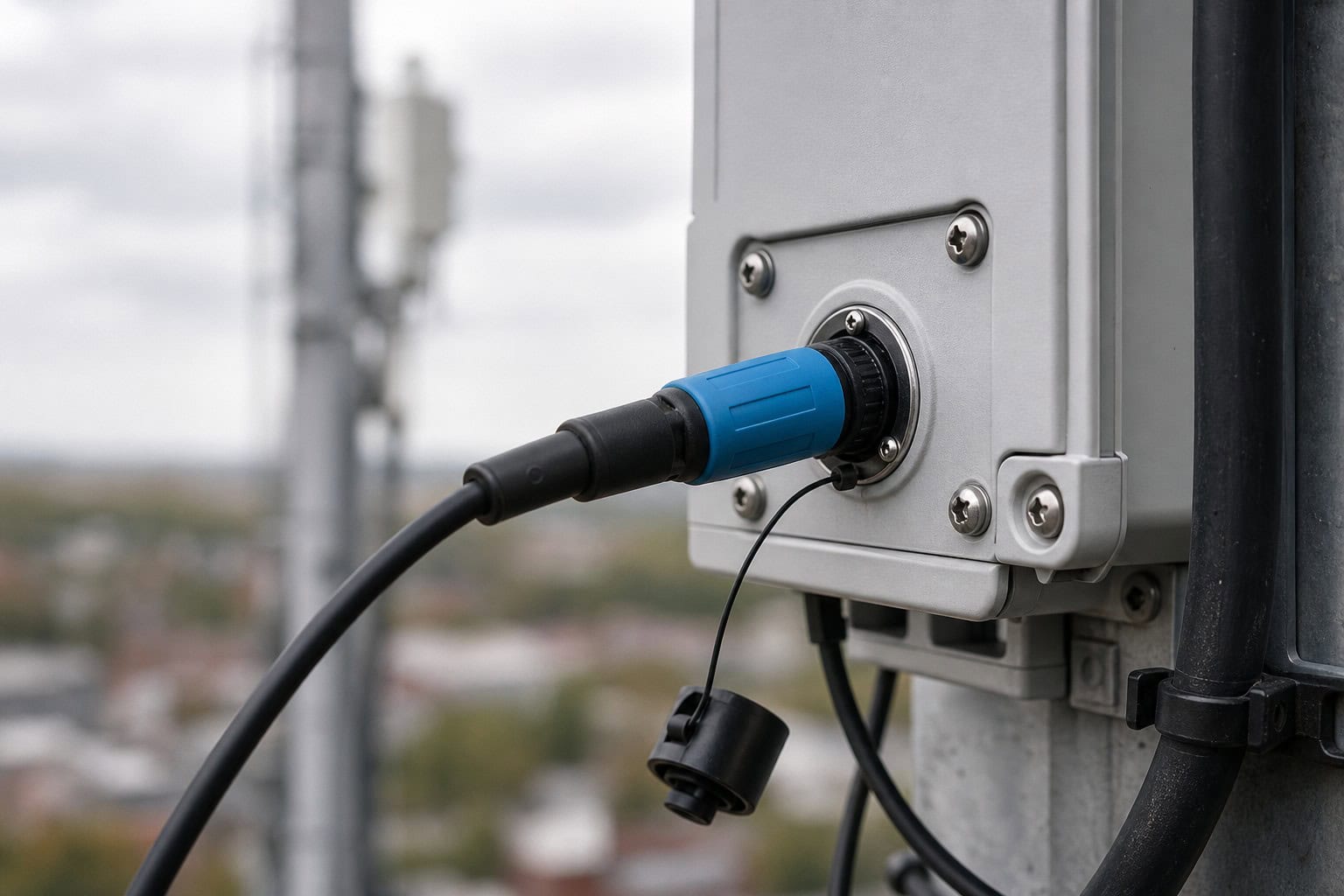
When your equipment must survive water, dust, chemicals, vibration, or extreme temperatures, ordinary connectors fail and downtime costs rise. Harsh environment connectors use rugged materials, advanced seals, and secure locking mechanisms to keep power and data flowing where failure is not an option.
This article explains what makes an environment “harsh,” look for the critical features from IP ratings to corrosion resistance and how choosing the right connector saves time and money.
What Defines A Harsh Environment?
Connectors in harsh environments must survive extreme temperatures, corrosive chemicals, persistent vibration, and heavy mechanical stress without failing. Each hazard uniquely affects materials, seals, and electrical continuity with precise specification of materials, coatings, and mating systems.
Extreme Temperatures & Thermal Cycling
Temperature extremes and rapid swings (thermal shock) critically impact performance. High temperatures can soften polymers and degrade seals, while low temperatures make materials brittle. Thermal cycling causes fatigue at joints and stresses seals. Solutions include using high-temperature polymers (like PEEK), stable metal platings, and designs that accommodate expansion, thus offering reliable connectors for harsh thermal conditions.
Chemical & Corrosive Exposure
Exposure to fuels, solvents, salt spray, and other chemicals accelerates failure. Corrosion attacks metal contacts and shells, while incompatible fluids cause elastomer seals to swell or degrade. Effective defense combines corrosion-resistant housing materials (e.g., stainless steel), protective platings (gold over nickel), and chemical-resistant seals. Proper sealing is paramount to prevent moisture and chemical ingress.
Physical Abuse: Impact, Abrasion, and Strain
Environments where connectors risk being dropped, dragged, or abraded require exceptional durability. Features like metal housings, overmolded cable assemblies, and integrated strain relief protect against physical damage and cable pull-out. These extend service life in the toughest field conditions.
Key Features Of A Harsh Environment Connector
To withstand these challenges, harsh environment connectors integrate specific design elements focused on sealing, strength, and stable connectivity.
IP Ratings Decoded: From IP67 and IP68 to IP69K
An IP rating is the first defense. IP67 guarantees dust-tightness and temporary immersion. IP68 specifies prolonged immersion at a defined depth. IP69K protects against high-pressure, high-temperature washdowns. For marine environments or food processing, selecting the correct IP-rated connector is non-negotiable for preventing ingress.
Material Science: Housings, Seals & Corrosion Resistance
The choice of materials determines longevity. Housings of stainless steel or anodized aluminum offer superior corrosion resistance and strength. Seals made from Viton, silicone, or EPDM must be selected for specific chemical and temperature exposure. This corrosion-resistant system is vital for longevity in corrosive settings.
Secure Connections: Locking Mechanisms & Contact Integrity
A secure mating interface is critical. Locking mechanisms (threaded, bayonet, push-pull) prevent accidental disconnection from vibration. Internally, contacts with high-retention design and stable plating (e.g., gold) ensure low and consistent electrical resistance over thousands of mating cycles.
The Complete Solution: Cable Assemblies & Connector Interface
A connector is only as good as its integration. A rugged cable assembly with proper strain relief and sealing at the cable gland is essential. For field serviceability, consider connectors with crimp or quick-disconnect terminations. The right assembly protects the entire connection point from stress and ingress.
Why Choose Specialized Connectors For Harsh Environment Applications?
Using off-the-shelf components in demanding conditions is a recipe for failure. Purpose-built harsh environment connectors deliver predictable reliability, which directly impacts operational uptime and safety.
Keeping Reliability With IP-Rated Connectors
IP ratings quantitatively define a connector’s resistance to solids and liquids. Match the rating to the real-world exposure—be it splashing, temporary immersion, or long-term immersion. For high vibration or washdown environments, specifying connectors with validated IP69K or IP68 ratings removes guesswork and provides assured protection.
The Critical Role Of Sealing And Durability Features
Seals and rugged construction form the primary barrier. Choosing the correct elastomer compound for the chemical and temperature profile is an important consideration. Metal housings add unmatched mechanical protection. Furthermore, a well-designed robust coupling mechanism and proper positioning of pins make the connection easier to seal and less likely to wear or fail prematurely over repeated use.
Reducing Failure And Downtime In Demanding Operations
Implementing purpose-built connectors drastically reduces fault-induced unplanned stops. Their ruggedized design maintains stable electrical performance to prevent overheating. Standardizing on industry-standard connector families (like M8 or M12 series) streamlines maintenance, inventory, and training. Specifying connectors with validated test data allows for predictable maintenance scheduling, minimizing downtime.
Selecting Connectors For Harsh Environment
A systematic selection process mitigates risk. Start by defining all operational parameters, then match them to connector specifications.
Define Your Environmental & Electrical Specifications
Catalog all environmental stresses: temperature extremes, chemical presence, high vibration levels, and risks like immersion or impact. In parallel, define electrical requirements: current, voltage, signal type (including need for high data throughput), and electromagnetic shielding (fully shielded options may be needed).
Match Connector Type & Form Factor
Based on specifications, select a connector category. Circular connectors are a predominant, industry-standard choice for general ruggedness and are also easier to seal. Consider size (M5, M8, M12) and orientation. Evaluate if a standard form factor suffices or if a custom connector is the appropriate option for unique spatial or performance challenges.
Evaluate Sealing, Materials & Mechanical Durability
Confirm the IP rating (e.g., IP66, IP68, IP69K) matches your worst-case ingress scenario. Select housing and seal materials for specific corrosion resistance. Verify mechanical durability specs: mating cycle life, vibration/shock resistance, and cable strain relief capability to handle being dragged along hard surfaces.
Consider the Complete Assembly and Serviceability
Adopt a holistic view. Specify the complete cable assembly and termination method. Consider serviceability: are specialized tools required? Is the connector designed for easy, reliable mating in the field, even under duress? Choosing designs that support the entire operational lifecycle is crucial for high-reliability applications like avionics or sensor applications.
Selection Checklist Table:
| Consideration | Key Questions | Look For |
| Environment | Temp extremes? Chemicals? Moisture? Vibration? Risk of physical abuse? | Matched IP rating (e.g., IP68, IP69K). Corrosion-resistant materials. Rugged construction. |
| Electrical | Power, signal, or high data? EMI concerns? | Correct contact size/plating. Fully shielded variants. High-density options if needed. |
| Mechanical | Risk of impact or vibration? Mating frequency? | Metal housing. Secure thread pattern or mating mechanism. High cycle-life contacts. |
| Integration & Service | Cable type? Space constraints? Field maintenance needs? | Compatible, rugged cable assembly. Right-angle option. Tool-less or simple tool (crimp) serviceability. |
Conclusion
Treating connectors as critical system components is fundamental to achieving transformational reliability. The right connectors with the correct protection ratings and materials is essential for a project’s success. This process involves understanding environmental challenges like extreme heat, rust, and vibrations. If these factors are ignored, the project will likely fail and become very expensive.
Investing in the appropriate harsh environment connector, be it an industry-standard M12, a ruggedized circular connector, or a tailored custom solution, pays lasting dividends in reduced downtime, lower lifecycle costs, and unwavering operational confidence. Use a strict selection process and work with proven suppliers. Your connections will be durable and perform well in extreme environments.